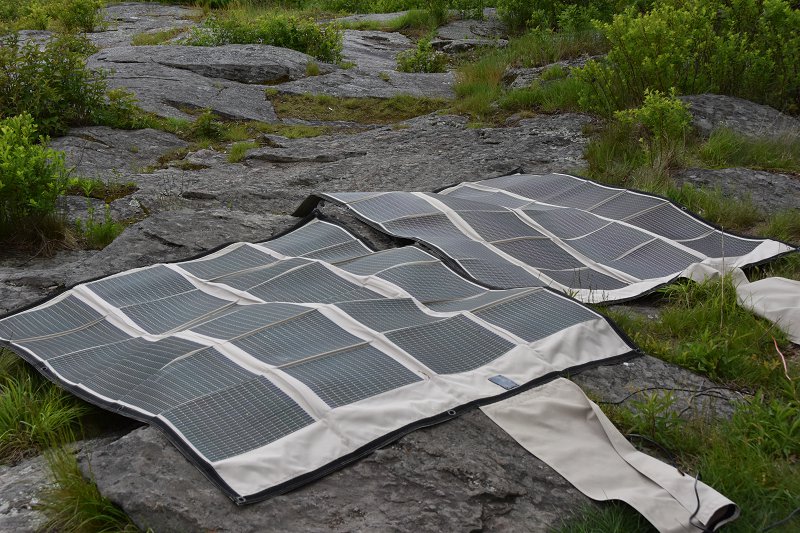
The idea was to use an IC-7300 to create a 100W station and use a Solar/Battery combination to power the setup. Solar/Battery made us “legal” as a SOTA activation. We combined two 90W solar panels which I had with an MPPT solar charging system and two LiPo batteries to create the power system for the activation.
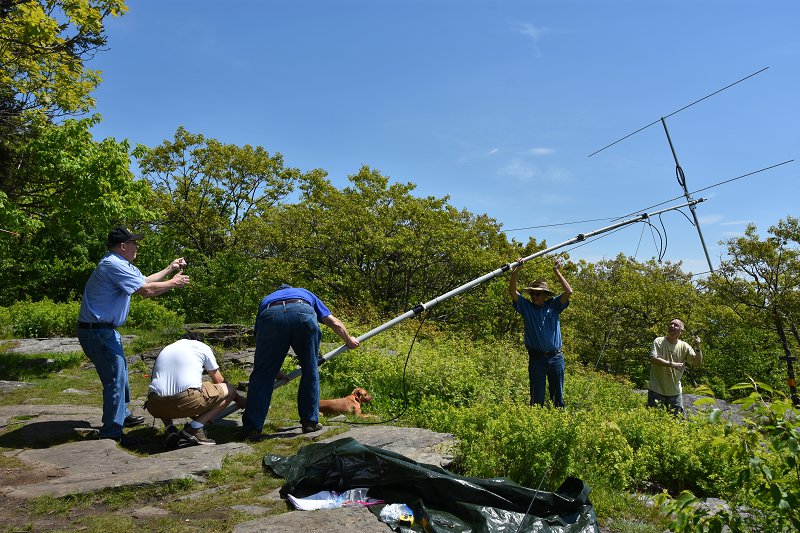
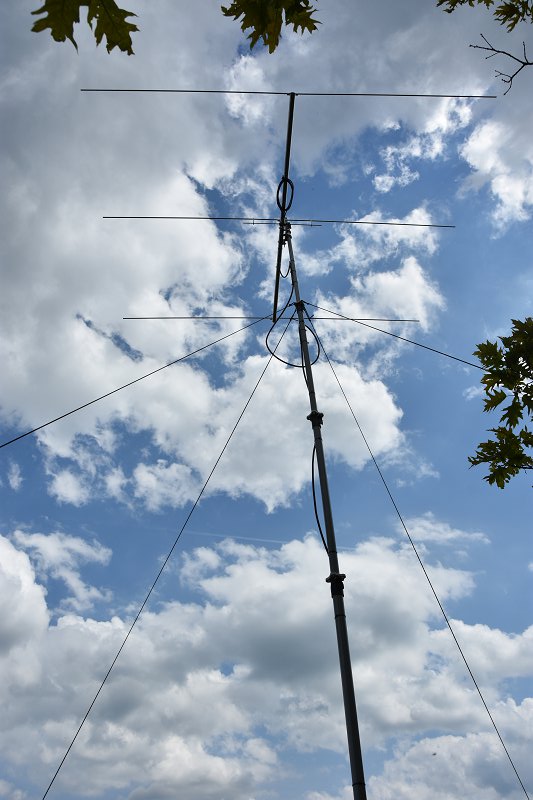
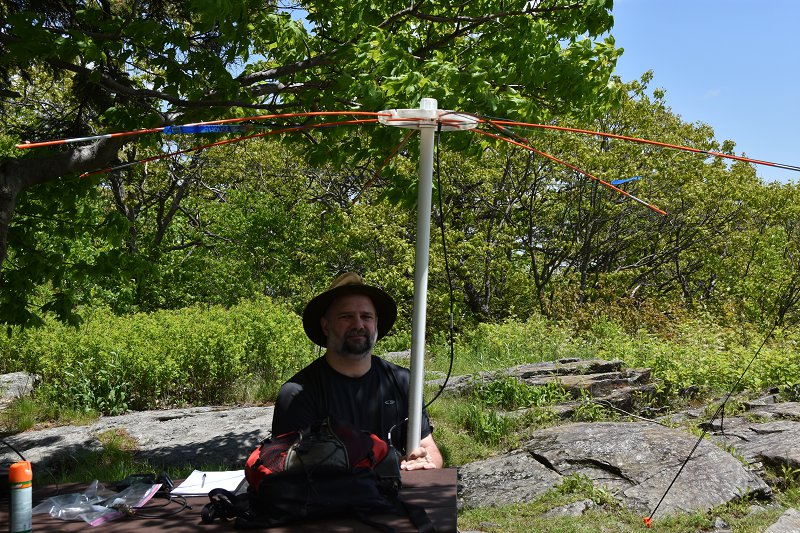
All of this gear was carried to the site and setup in about an hour. A 25 ft. section of LMR-400UF coax completed the station. The mast was guyed with rings which allowed us to turn the mast/antenna combination to point the Yagi in any direction.
6M SOTA Activation
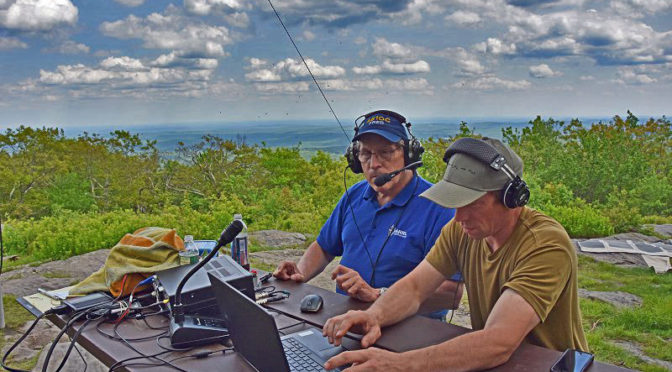
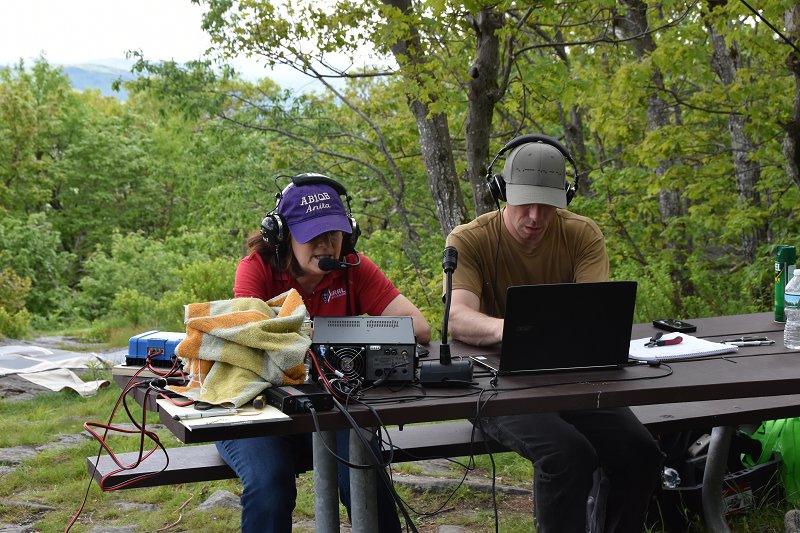
Anita, AB1QB, and Curtis, N1CMD Operating in the June VHF Contest
Between the SOTA/POTA activation and the June VHF contest, we made a little over 130 contacts on 6m. We did not have any real Es openings so most of our contacts were regional. Having the elevation provided by being on Pack Monadnock made us quite loud for the stations that could hear us. Several of our club members got on 6M and joined the fun. We did have a brief Es opening and managed to work a station in Alabama and one in Florida.
Mike, AB1YK Portable 6M
Mike, AB1YK has a much more portable 6M setup and used lower power to have some fun on 6M as well.
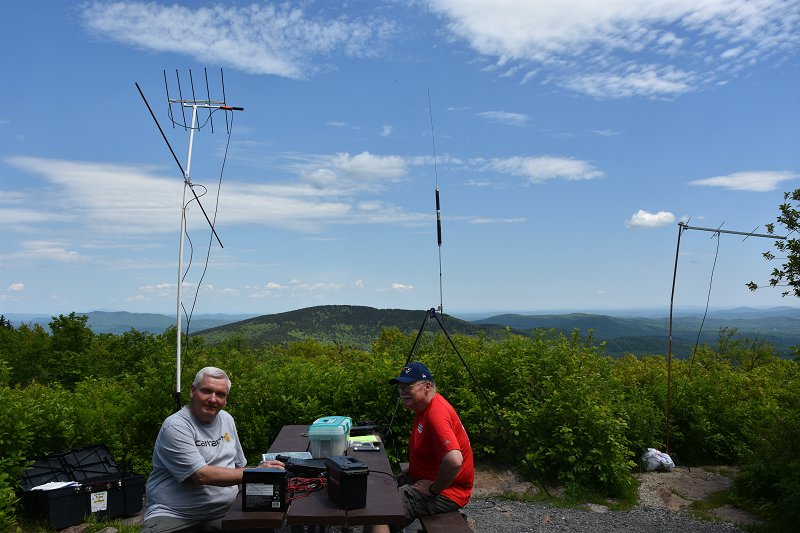
Al, KC1FOZ and Tom, KC1GGP Operating Portable
Al, KC1FOZ and Tom, KC1GGP put together a nice station and operated using battery power. Several other club members came out with a portable station or to watch and have fun as well.
Our first SOTA/POTA activation was a lot of fun and Anita and I are looking forward to the next one!
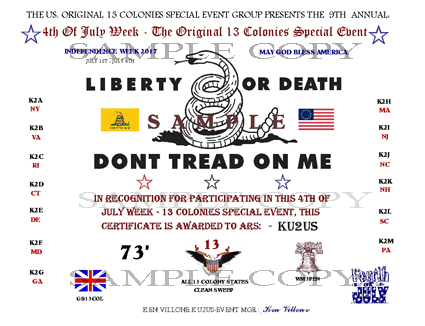
The Thirteen Colonies Special Event begins at 9 am Eastern Time (13:00 UTC) on Saturday, July 1st and ends on July 6th at midnight ET. The K2K NH team will have a full complement of top-notch operators on all bands and modes again this year including a dedicated QRP station. We’ve also designed a new QSL card for this year’s special event (above).
2017 Thirteen Colonies Special Event Certificate
Take some time during the event and work K2K New Hampshire for your own copy of our new K2K QSL and don’t forget to send for your certificate. If you work a station from each of all Thirteen Colonies, your certificate will indicate a “clean sweep”. There will be two bonus stations that you can work as well. Check out The Thirteen Colonies Special Event Site for all of the details on the event.
This event is a lot of fun for all involved and may well be the largest special event in the world. The QSO count for the event last year was 139,772 contacts in about 6 days! We hope to hear from you during the event and DX stations are especially welcome!
We’ve been thinking about building a portable Go Kit for VHF/UHF Emergency Communications (EMCOM) and Field Day Applications for a while now. The following is a list of our requirements for a Go Kit –
2m and 70cm operation with FM simplex and repeaters
APRS capability and tactical display for portable coordination
The heart of any Go Kit is the Transceiver. We’ve been using Kenwood equipment for our APRS iGate for some time now and we have had good results with it. Kenwood’s latest 50W transceiver with APRS is the TM-D710GA. This unit provides full support for APRS tactical applications and now includes a built-in GPS receiver making it ideal for our Go Kit application.
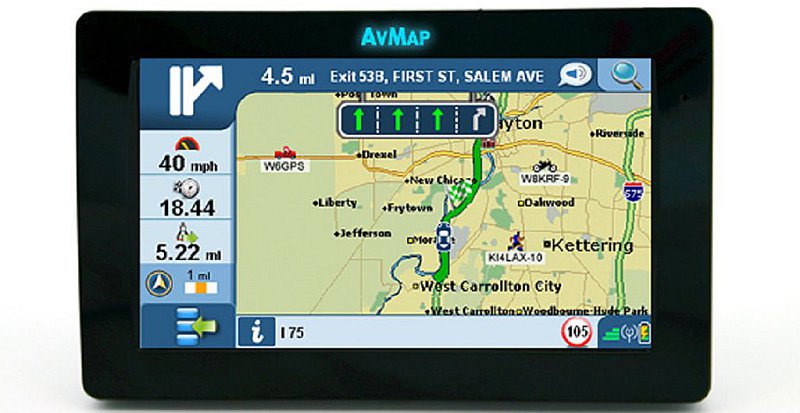
AvMap GeoSat 6 APRS Tactical Display
We have been using the Kenwood TM-D710 along with an AvMap GeoSat APRS display in our APRS iGate setup and the combination works very well. The AvMap display lets one see the location of portable and mobile APRS stations on a map display. This arrangement is perfect for coordinating activities in an EMCOM situation. The AvMap GeoSat 6 APRS display is no longer in production but I was able to locate a nearly new unit on eBay.
EMCOM Go Kit Packaging
iPortable Enclosure
We had a chance to look at the iPortable enclosure at Dayton and decided that their Pro 2 4U deep unit would be a good choice for our Go Kit application. The iPortable enclosures are based on a portable rack mount case and include a DC power system, speaker and headphone hookups, a light, and provisions for a cooling fan.
EMCOM Go Kit Construction
Radio Shelf
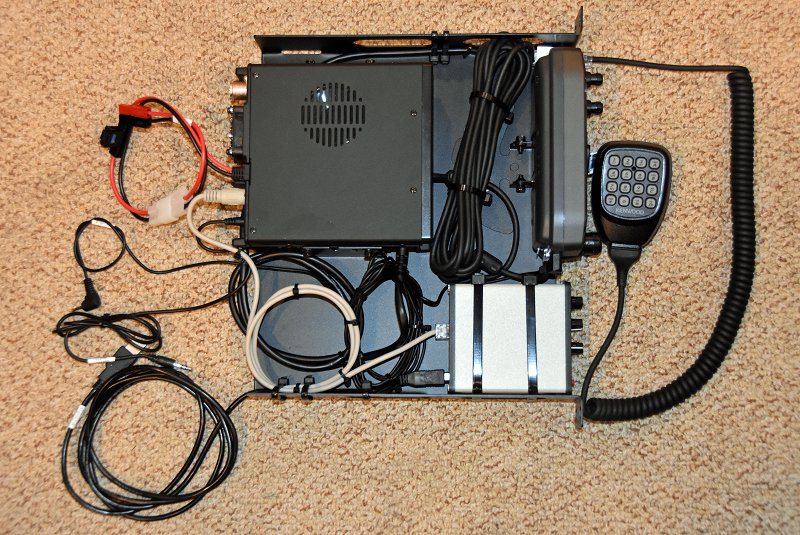
With all the components in hand, we began the construction of our Go Kit. Reliability is important in any portable system like this so we put some time into securely mounting all of the equipment and neatly arranging the cabling. First came the shelf which holds the Kenwood transceiver and a SignaLink USB sound card. A combination of drilling the shelf to secure gear with large cable ties and #8 stainless hardware was used here.
Coax Connector Cables
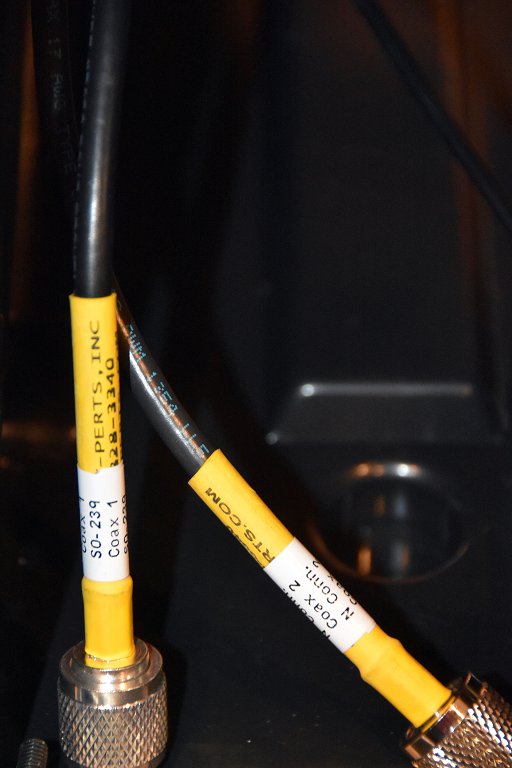
Our iPortable case was equipped with both SO-239 and N-connectors on the front panel to allow for antennas and feed lines equipped for either connector type. To make the change over between the connector types easy, we installed separate PL-259 jumper cables for each connector. One simply connects the appropriate jumper to the radio.
Display and Power Shelf
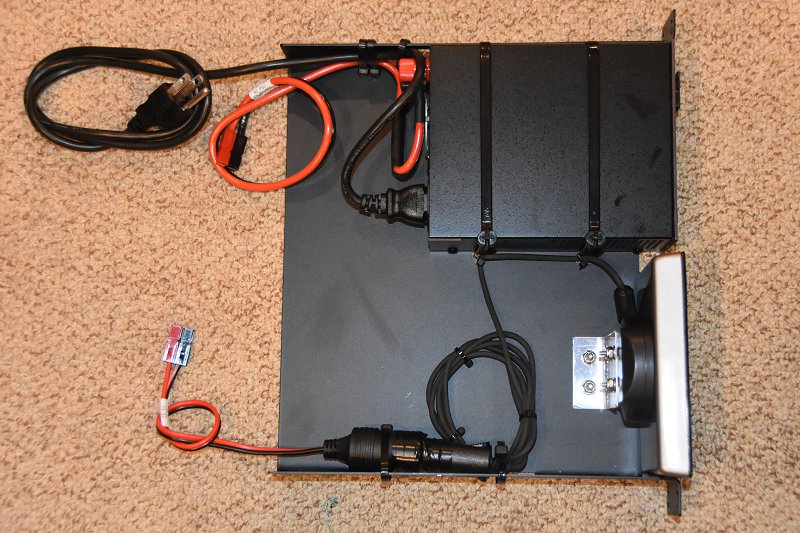
The power and AvMap display shelf were next. The AvMap display mount was dissembled and modified to accept a custom mounting bracket.
PWRgate Battery Interface and Charger
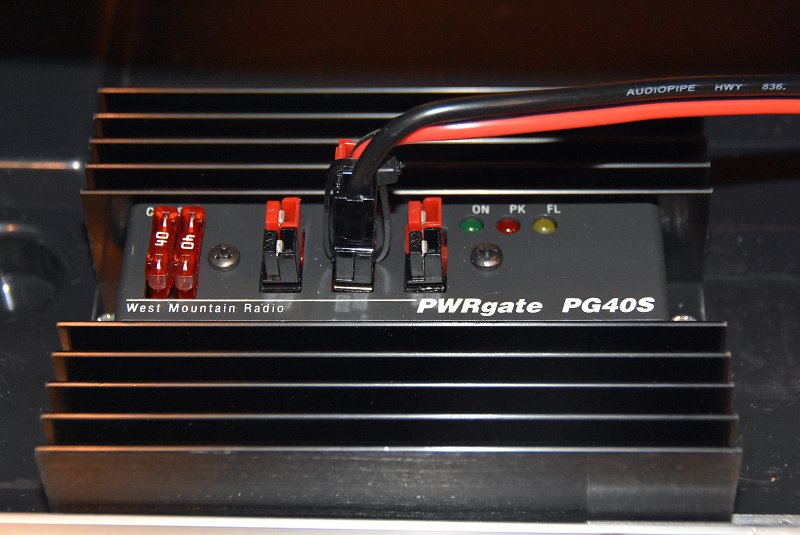
The iPortable enclosure was drilled to mount a West Mountain Radio PWRgate to handle backup battery charging and management. The PWRgate supports instantaneous switching between an AC power supply and a backup battery and can accommodate a wide range of battery types and sizes.
Backup Battery
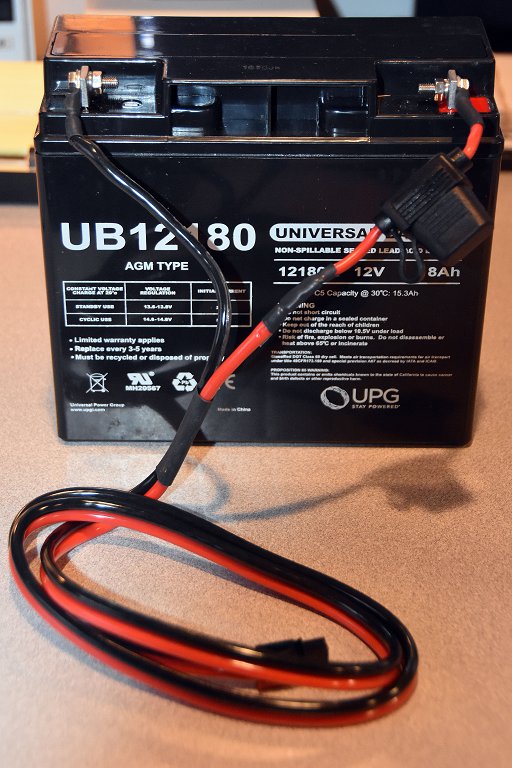
The PWRgate was configured to properly charge our 18AH AGM backup battery. Note the use of a fuse in series with the battery for safety reasons. We used a Powerwerx SPS-30DM adjustable power supply set to 14.5Vdc to operate our Go Kit and to provide the proper charging voltage for our AGM battery.
EMCOM Go Kit Operation
Diamond X-30 Antenna and Mast
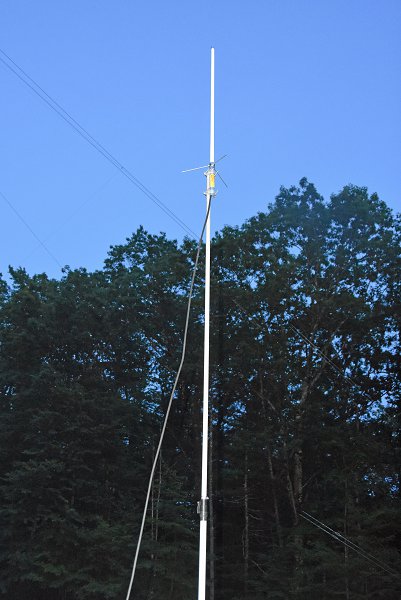
The last piece of the setup was the antenna. We wanted something that was portable, easy to set up and would provide good performance. We choose a Diamond X-30A 2m/70cm ground plane antenna and mounted it on a 12′ fiberglass push up mast. The feed line is made from 25′ of LMR-400UF coax. Several bungee cords are used to attach the mast to a fence post or other vertical structure.
Finished Go Kit In Use
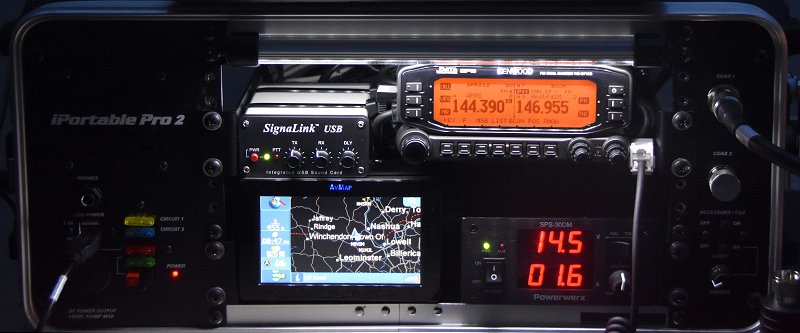
The picture above shows the completed Go Kit in operation. We typically set one side of the Kenwood TM-D710GA to operate as an APRS transceiver and Digipeater and the other side to operate on a local repeater or simplex FM. The SignaLink sound card is used with a laptop computer running Fldigi and NBEMS for messaging applications. The iPortable case has a 13.8V lighter socket which connects to a power brick to power our laptop PC.
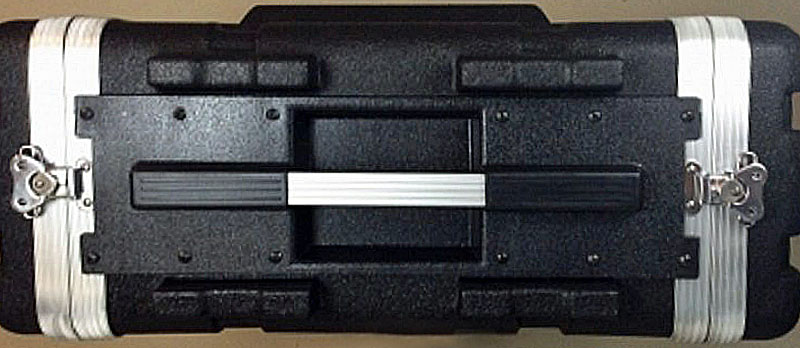
Go Kit Packaged for Transport
The Go Kit is quite portable when closed. All of the equipment and cable connections are enclosed and protected by the case’s removable end caps. We’ve tested our Go Kit during our club’s weekly repeater net and it worked great. The first real use of our new Go Kit will be at Field Day this year. It will be located in our public information tent and will be used as a “talk-in” system.