Category Archives: Featured

This category is for featured articles that we want to include in the sidebars and other areas on our website.

Making Contacts Through LEO Satellites

I’ve been having a lot of fun this past week learning to operate using satellites. It is amazing how many LEO satellites are operational right now!
LEO Satellites - Antennas
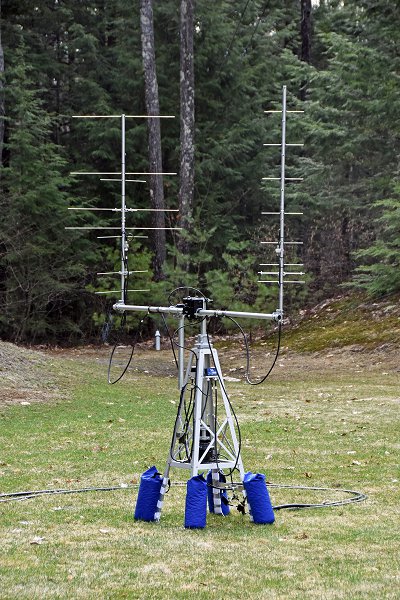
Satellite Antennas

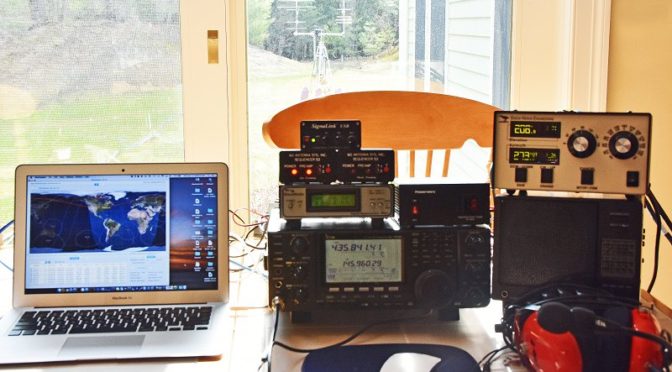
We built an improved portable LEO satellite station a little while back and used it for the first time during a Technician License Class that we taught earlier this spring.

We decided to set up the station in our back yard about a week ago. The idea was to spend some more time learning to operate the station and to improve our satellite operating skills.

The past week has been a productive one. Here are some stats for our satellite operations during the last 7 days –

  • Contacts Made: 78
  • Modes Used: SSB Phone, FM Phone, CW and Packet (APRS FM)
  • Satellites Worked – 9 Total plus the ISS: AO-7, AO-85, ARISS (International Space Station), FO-29, SO-50, XW-2A, XW-2B, XW-2C, XW-2D, and XW-2F
  • States Worked: 23
  • Grids Worked: 49

The week began with a visit from Curtis, N1CMD who has quite a bit of experience with Digital Packet operation via the digipeater on the ISS. After some experimentation, Curtis helped me to find a setup using a SignaLink Sound Card and a second, windows computer that works well for Packet QSOs. I tested the setup using the terrestrial APRS network to get all of the hardware and software working correctly. The combination was then used to make a first packet contact using the ISS.

Operational LEO Satellites

The LEO satellites which are currently operational support a mix of split band modes. All of the satellites that we’ve worked so far use either 2M/70cm or 70cm/2M up and downlinks. The satellites support a variety of operating modes including via single channel FM, linear transponders, and APRS packet systems. Operating skills such as proper adjustment of up and downlink frequencies, Tx power management and setup of the digital packet system have been at least partially mastered this past week.

There are a great bunch of folks who are regulars on the satellites and we have made some new friends in our short time operating through satellites. The single channel FM satellites are usually too busy to support rag-chewing. The linear transponder satellites (there are many of these) support several conversations at the same time and we have had some nice rag-chew sessions on these birds.

There is also a good bit of DX to be had via satellites. This past week we have worked Patrick, FJ/N2IEN in Saint Barthelemy; Chris, 9Y4D in Trinidad and Tobago; Burt, FG8OJ in Guadeloupe; Fausto, HC9VF in Ecuador; and several stations in Canada.

We are planning to set up our portable satellite station at Field Day this year. Curtis will be the main operator/station master for our satellite station. If you are interested in learning more about satellite operations, please let Curtis or I know and we’ll help you to learn more during Field Day 2017.

Fred, AB1OC
QRPGuys Iambic Paddle Build

I’ve been practicing a lot of CW lately and had ordered a QRP guys iambic paddle from their website qrpguys.com awhile back. I went to the CW class on Saturday morning, which got me in the CW mood. After knocking some items off the honey-do list I was getting a little bored on Saturday night so I headed down to the shack and dug out the iambic key kit I had ordered.

I’ve never done any kit building or anything slightly engineer-y until joining the club. I don’t always understand why things work and building kits (even simple ones help me along). This kit didn’t look too hard, although it has a 4 out of 5-star difficulty rating on their website, so I jumped right in!

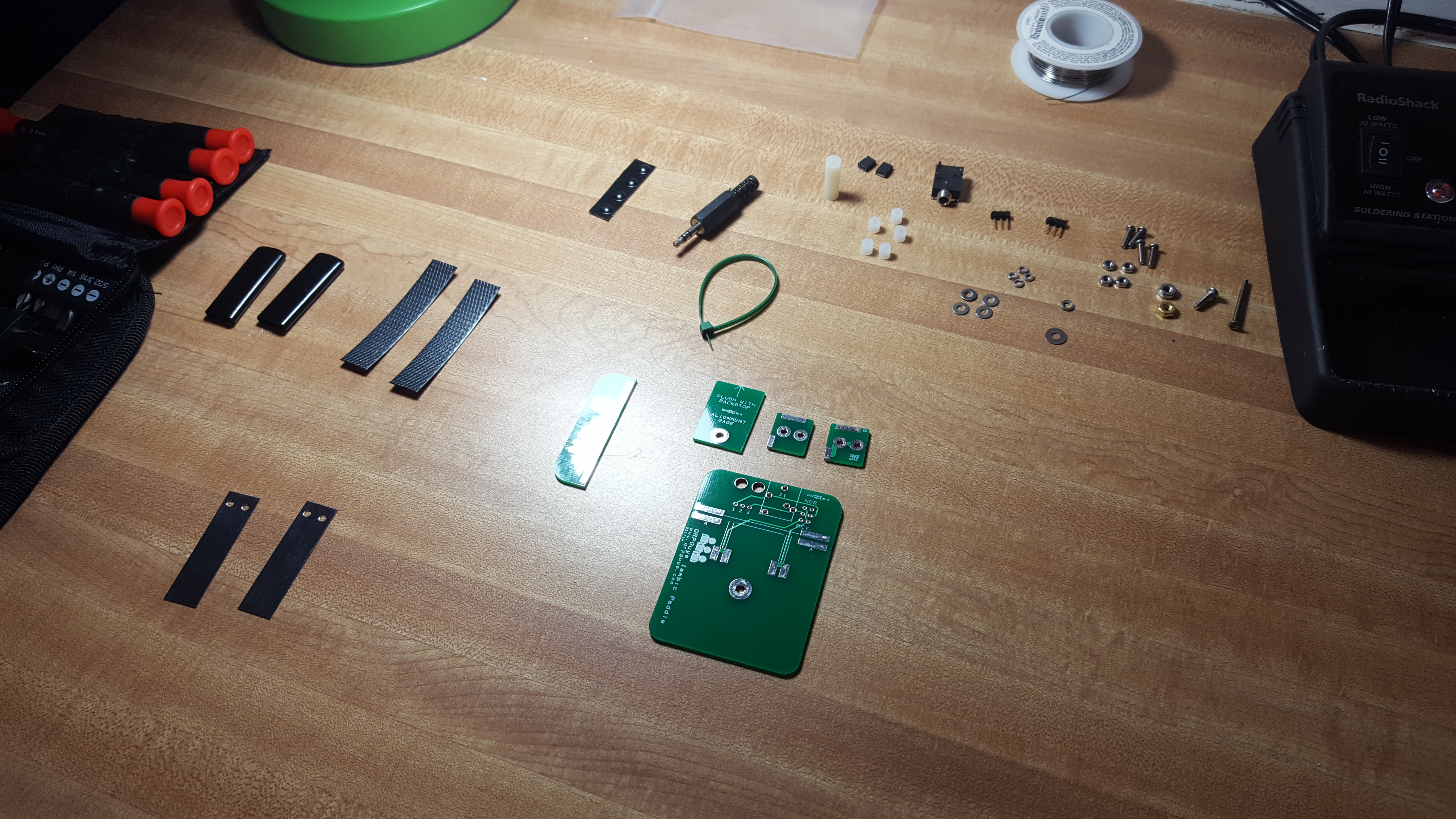
I made sure I started by sorting out all the parts in an orderly fashion.Iambic Paddle Build  I learned this much from working countless hours after Christmas and birthdays on Star Wars lego kits that are made for children, but built by adults after the kids get frustrated 15 minutes after starting!

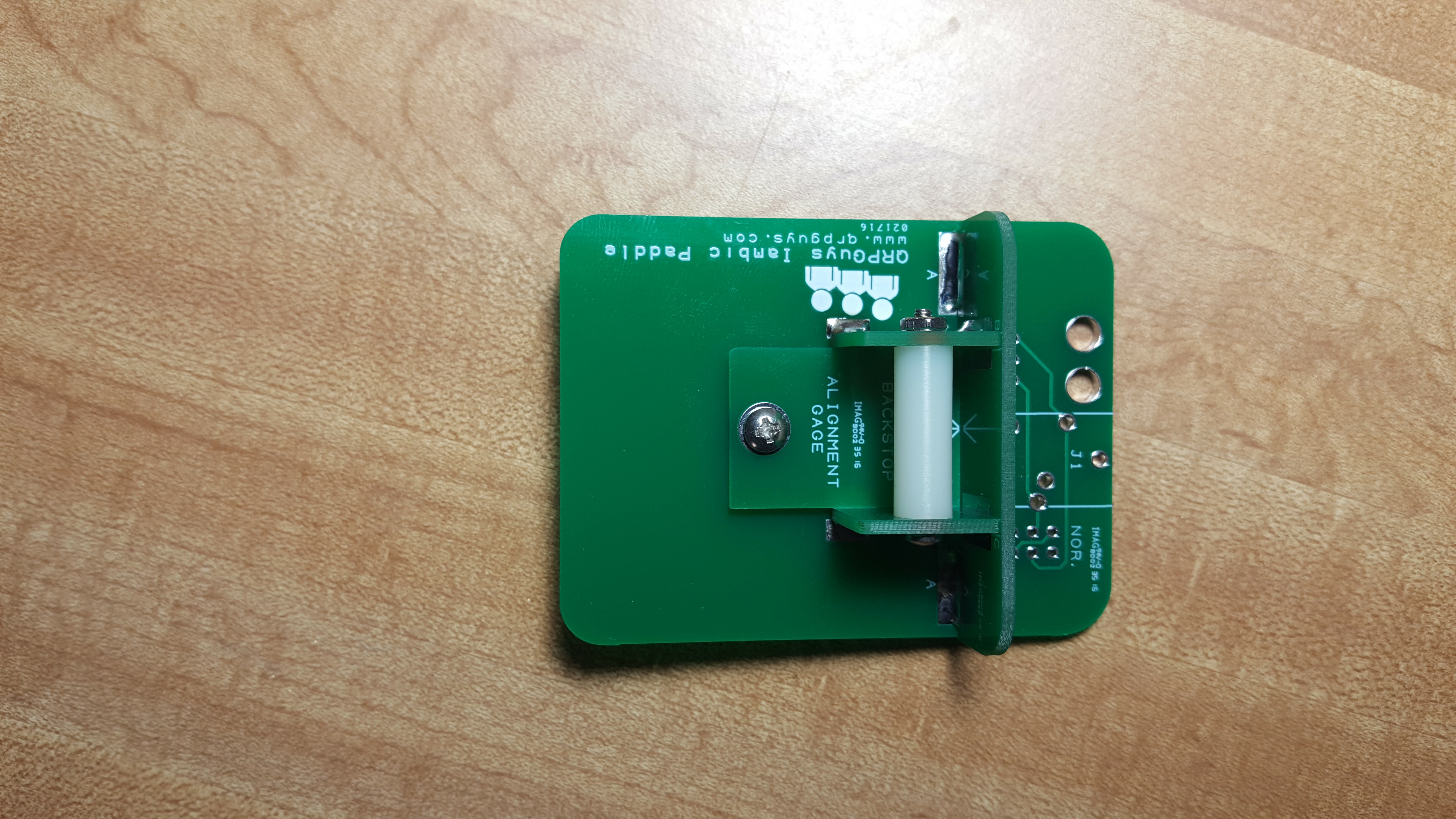
I then got to the fun part of soldering. This was different than what I’ve done in the past as I started with soldering all the mechanical parts together by applying a small amount of solder and then checking to make sure everything lined up before putting a lot of solder on. Iambic Paddle BuildI enjoyed this as it was a large area to solder and it didn’t matter so much if my soldering skills aren’t very good! There were only a few electrical components to solder and that part was rather easy, even for my limited skills!

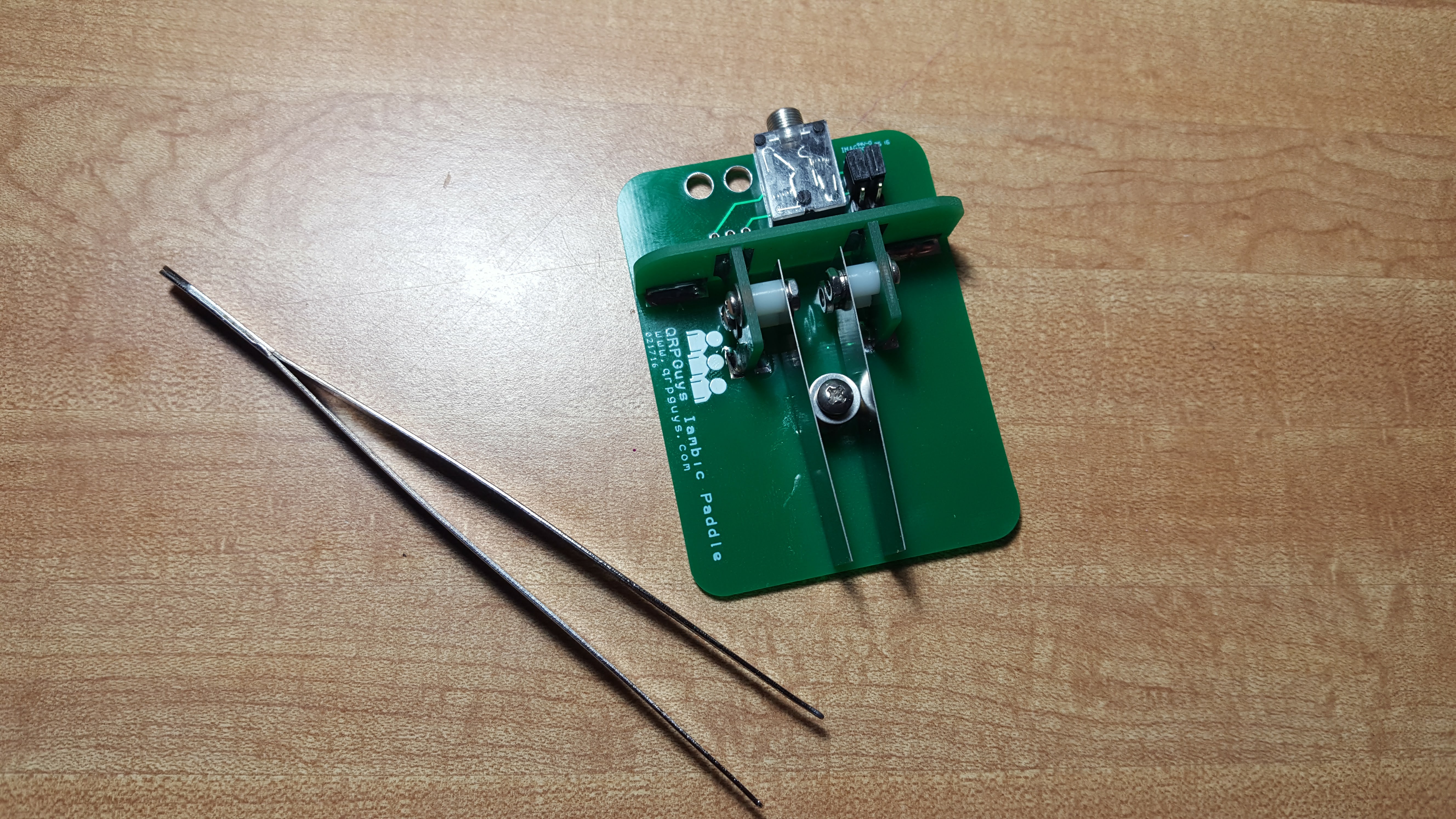
The toughest part of the whole build was assembling the paddles. You can see from the picture there are four nuts (and lock washers) that are to be assembled on the inside of the paddles with very limited space. TIambic Paddle Buildweezers were an absolute necessity – and earplugs for any youth that may be hanging around. After many – and I do mean many – attempts of dropping and picking up nuts and washers I finally got the washers and nuts in place and fastened.

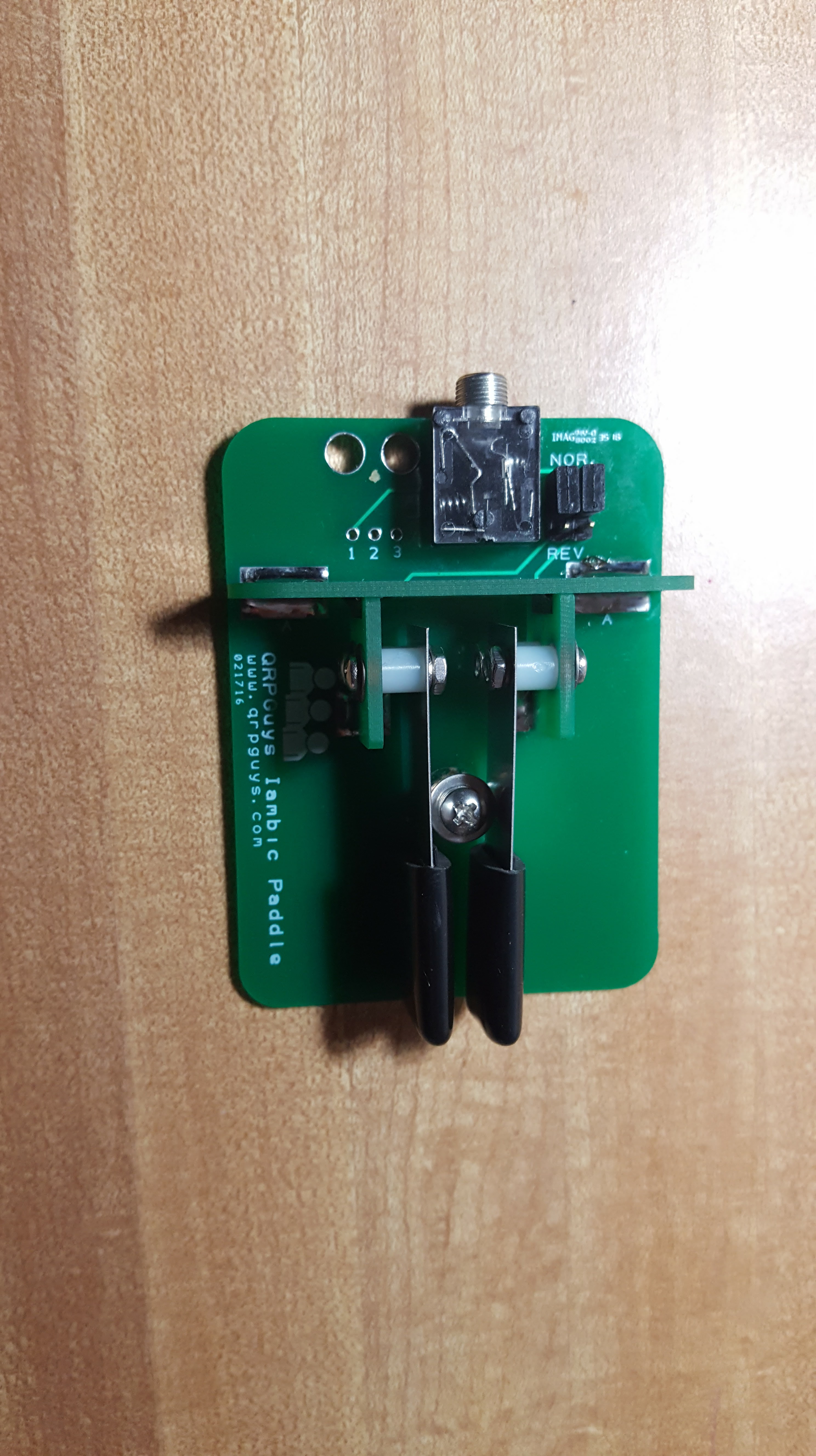
Iambic Paddle Build

I was thrilled to have succeeded and ran out to the car, where my radio is hooked up at the moment and gave it a quick test run. Below is my not-so-professional video which shows my not-so-professional CW skills.

The paddles work well. The black pads do stick together a little when you push on both paddles at the same time, but I am very happy with my tiny QRP paddles! I am thinking of cutting slots in the sides and attaching a velcro band to attach to my leg to keep the paddle in place in the hopes that I could operate it with one hand. Let me know what you think or if you’ve built this kit before.

73,

Jamey (KC1ENX)

Our Ham Radio Video and Photo Collections

We have been building quite a collection of Ham Radio video and photos over the past few years. We have pictures and video from Field Days, Contests and Activations, Club Meetings, Tech Nights, Youth Events, Picnics, Classes, and other Member Activities.

We’ve decided to collect all of this great content in one place here on our website so that our members can enjoy it. You can view it via the following links:

Take a trip down our Club’s Memory Lane or catch up on some topics from one of our many Tech Night sessions. There is lots of material here to use for fun and learning.

Most (but not all) of this content is in members-only sections of the pages so be sure to log in to our website to view all of the media that we have collected.

Thanks to all of our members for making so many great memories! We are looking forward to much more to come…

Fred, AB1OC

Radio Amateurs Developing Skills Worldwide